
Safe Sleep Tips for Infants

best pedia for newborn

Safe Sleep Tips for Infants

Creating a safe sleeping environment for babies is a top priority for every new parent as babies sleep for about 16 hours a day. It is important for new parents, nannies or child care professionals to be informed about safe sleeping practices to reduce the risk of injuries and issues such as Sudden Infant Death Syndrome (SIDS). If you are someone who wants to learn more about the topic keep reading this blogpost. Below are some tips for keeping your baby safe while sleeping.

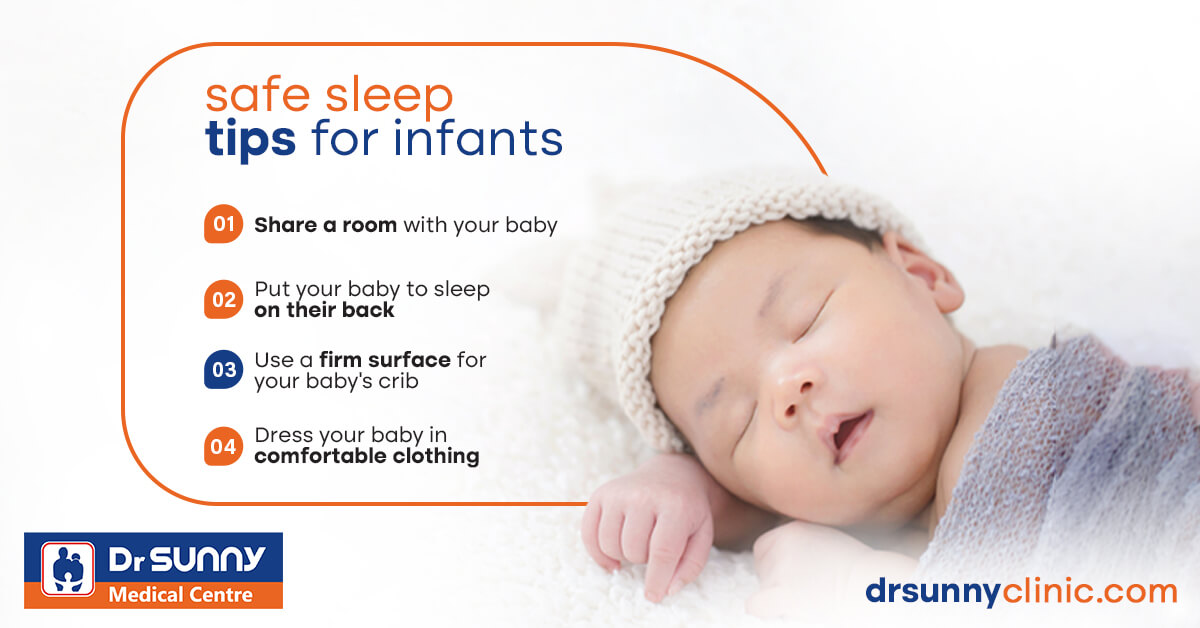
Share a room with your baby: To reduce the risk of sleep-related infant death, it is recommended to share a room with your baby and sleep close by. You can place your baby’s crib next to your bed, so you are within reach but not sharing a sleeping surface.

Put your baby to sleep on their back: Always place your baby on their back while putting them to sleep. It is not safe for a baby to sleep on their side or tummy. However, if your baby starts rolling over from their back to side or tummy and back again, it is not a problem.

Use a firm surface for your baby’s crib: Make sure the mattress in the crib is firm and there are no gaps between the frame and the mattress. Avoid placing any toys or other objects in the crib as they could put your baby in danger of being suffocated.

Dress your baby in comfortable clothing: When putting your baby to sleep, avoid covering their head and remove any strings or ties from their clothing. Ensure the room is at a comfortable temperature.

Avoid letting your baby sleep in a carrier, sling, or stroller: If your baby falls asleep in a carrier or sling, be sure to transfer them to their crib as soon as possible.

No matter how much you read up on parenting or get advice on newborn baby care from family or friends you still feel under prepped. You need not worry because we are here to clear up your doubts. You can consult our children’s doctor to help you create a safe sleeping environment for your baby or even get our newborn care services to help you. Call us today to book our services.
Understanding Fever in Children

Understanding Fever in Children

Understanding Fever in Children

Fever is a common health issue faced by children and is usually a sign that their body is fighting off an infection. It is important for parents and childcare professionals to understand fever in children and how to manage it aptly. To make things simpler for you, in this blog post we will explain a few points that would help you to understand this common symptom faced by children.

What is considered a fever?

In children, a rectal temperature of 100.4°F (38°C) or higher is generally considered a fever. However, the definition of fever may vary depending on the method used to measure temperature (e.g., oral, axillary, ear).

Causes of fever

Fever can be caused by various factors, including viral or bacterial infections such as the common cold, flu, or ear infections. Other causes may include immunizations, teething, environmental factors, or underlying medical conditions.

Symptoms accompanying fever

Fever itself is not an illness but rather a symptom of an underlying condition. Children with fever may also experience other symptoms like cough, sore throat, runny nose, headache, muscle aches, fatigue, or loss of appetite.

How to measure temperature

There are various methods to measure a child’s temperature, including rectal, oral, axillary (armpit), and tympanic (ear) measurements. For infants and young children, rectal temperature is generally considered the most accurate.

Importance of monitoring

It’s essential to monitor a child’s temperature regularly during a fever. This helps determine if the fever is getting better or worse and if medical attention is necessary. Keep a record of the temperature readings and any other symptoms to share with a pediatrician if needed.

When to seek medical care?

In most cases, fever itself is not a cause for concern. However, certain situations may require medical attention, including:

  • Infants under 3 months old with a rectal temperature of 100.4°F (38°C) or higher.
  • Persistent fever lasting more than a few days.
  • High fever (103°F or higher) or fever that rapidly spikes.
  • Signs of dehydration, such as decreased urination, dry mouth, or sunken eyes.
  • Severe headache, neck stiffness, or sensitivity to light.
  • Difficulty breathing or rapid breathing.
  • Seizures or convulsions.

Home care for fever

  • Encourage your child to rest and maintain a comfortable room temperature.
  • Ensure adequate fluid intake to prevent dehydration.
  • Dress the child in light clothing and use a light blanket if necessary.
  • Always consult a pediatrician before giving any medication to the child.
  • Provide a cool sponge bath to help lower the child’s temperature if they are uncomfortable.
  • Keep the child’s environment clean and maintain good hygiene practices to prevent the spread of infections.

Take action

If you have any concerns about your child’s fever or their overall condition, it is always best to consult a children’s doctor for proper evaluation and guidance. If your child has a temperature, book an appointment with us today.

If you are a working parent and leave your baby with a nanny or nurse make sure they continuously monitor the baby’s temperature. If you choose a nanny from Maika they are well trained in giving the best possible care. For more details contact us right now.