

Quick answer: A dental implant is a small titanium post placed in the jawbone to replace a missing tooth root, topped with a custom crown. Treatment usually involves an assessment, surgical placement, a healing period while the implant fuses with bone, then fitting the final crown. Suitability varies — book a consultation to confirm.
Losing a tooth can affect how you eat, speak and smile. Dental implants are one of the most established ways to replace missing teeth, and they look and function much like natural teeth. This guide explains the process, healing and who implants tend to suit, in plain language. For anything specific to your situation, the dentists at Dr. Sunny Medical Centre in Sharjah and Umm Al Quwain can assess and advise.
What is a dental implant?
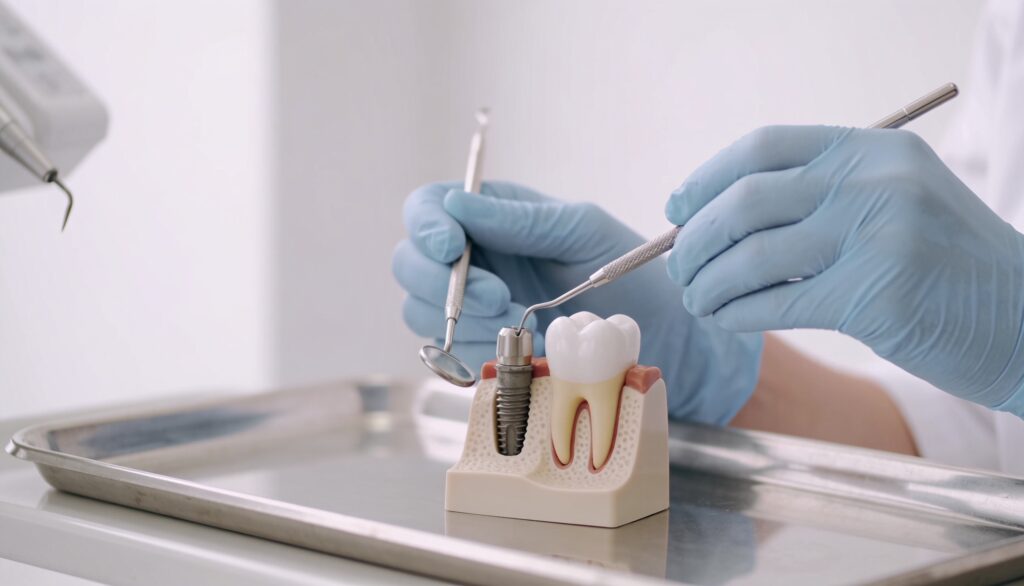
A dental implant is an artificial tooth root, usually made of titanium, that is placed into the jawbone to support a replacement tooth. It is not a single piece but a small system of parts working together.
A typical implant has three main components:
- The implant (fixture) — the screw-shaped post placed in the bone, acting as the new root.
- The abutment — a connector that sits on top of the implant and links it to the visible tooth.
- The crown — the custom-made tooth that is fixed onto the abutment and matched to your natural teeth.
Implants can replace a single tooth, several teeth (often with a bridge) or support a full set of teeth. The right approach depends on how many teeth are missing and the condition of your jawbone and gums. You can learn more on our dental implants service page.
What are the steps in getting a dental implant?
Most implant treatment follows a similar sequence, carried out over more than one appointment. The exact plan is tailored to each patient.
- Assessment and planning — Your dentist examines your mouth, reviews your medical and dental history, and usually takes X-rays or a 3D scan to check the bone and plan the implant position.
- Placement — The implant is surgically placed into the jawbone, typically under local anaesthetic. Some patients may need preparatory treatment, such as a tooth extraction or bone grafting, before or during this stage.
- Healing and osseointegration — Over the following weeks to months, the bone gradually grows around and bonds to the implant. This fusion, called osseointegration, is what gives the implant its stability.
- Fitting the crown — Once healing is confirmed, the abutment and final custom crown are attached, completing the tooth.
Some cases allow a temporary tooth in the meantime. Whether this suits you depends on your individual treatment plan, which your dentist will discuss with you.
What is osseointegration and why does it matter?
Osseointegration is the process by which living jawbone grows onto and bonds with the surface of the implant, locking it firmly in place. It is the foundation of a successful implant.
Because this is a biological healing process, it cannot be rushed. Giving the bone enough time to integrate before the implant is loaded with a crown helps the implant remain stable for the long term. Your dentist confirms that integration has happened before moving to the final restoration.
Who is a good candidate for dental implants?
Many adults with one or more missing teeth can be considered for implants, provided they have generally good oral and overall health. A consultation is the only reliable way to confirm suitability.
Factors a dentist usually weighs up include:
- Jawbone — Enough healthy bone is needed to hold the implant; where bone has reduced, grafting may be an option.
- Gum health — Healthy gums and good oral hygiene support healing and long-term success.
- General health — Some medical conditions or medications can affect healing and are reviewed case by case.
- Lifestyle — Smoking can slow healing; your dentist will discuss how it may affect your treatment.
- Age — Implants are generally for adults whose jaw growth is complete.
Having one of these factors does not automatically rule you out — it simply means your dentist will plan carefully. Book a consultation for a personalised assessment.
How long does dental implant healing take?
Healing time varies from person to person and depends on factors such as bone quality, the number of implants and whether extra procedures like bone grafting are needed. Your dentist will give you a timeline based on your case.
In general terms, gum healing after surgery is relatively quick, while full osseointegration of the implant into the bone takes longer — often several weeks to a few months — before the final crown is fitted. Attending review appointments and following aftercare advice helps healing go smoothly.
How do I care for implants and how long do they last?
Cared for well, dental implants can last many years. Caring for an implant is much like caring for a natural tooth.
- Brush twice daily and clean between your teeth as advised.
- Attend regular dental check-ups and professional cleanings.
- Avoid using your teeth to bite very hard objects.
- Tell your dentist promptly if you notice pain, looseness or gum swelling.
Longevity depends on oral hygiene, gum health, lifestyle and routine maintenance, so outcomes differ between patients. Your dental team can tailor an aftercare plan for you.
What are the alternatives to dental implants?
Implants are one option among several. The best choice depends on your needs, budget and oral health, and is best decided with your dentist. Cost varies by case — book a consultation for a personalised quote.
| Option | What it is | Good to know |
|---|---|---|
| Dental implant | A titanium post and crown that replaces a single tooth root and tooth | Does not rely on neighbouring teeth; involves surgery and a healing period |
| Fixed bridge | A false tooth held by crowns on the adjacent teeth | Non-surgical; usually involves preparing neighbouring teeth |
| Removable denture | A removable plate replacing one or more teeth | Non-surgical and often more affordable; removed for cleaning |
Your dentist will explain the benefits and limitations of each so you can make an informed decision.
Frequently Asked Questions
Are dental implants painful?
Implant placement is usually carried out under local anaesthetic, so you should not feel pain during the procedure. Some soreness or swelling afterwards is normal and is generally managed with advice and medication from your dentist.
How many appointments do dental implants take?
Implant treatment typically spans several visits, including assessment, placement and fitting the final crown, with healing time in between. The exact number depends on your individual plan.
Can anyone get dental implants?
Many adults are suitable, but it depends on factors like bone, gum health and general health. A consultation is the only way to confirm whether implants are right for you.
What happens if there isn’t enough bone for an implant?
Where bone is reduced, a procedure such as bone grafting may be possible to build up the area before or during implant placement. Your dentist will advise whether this is needed.
How much do dental implants cost in the UAE?
The cost varies depending on your specific needs, the number of implants and any additional procedures. Please book a consultation for a personalised quote.
Do I need to take time off work?
Many people return to normal activities soon after implant placement, though this depends on the procedure and how you heal. Your dentist will give you tailored aftercare guidance.
This article is for general information and is not a substitute for professional medical or dental advice.
Thinking about replacing a missing tooth? The dental team at Dr. Sunny Medical Centre can assess your smile and explain your options. Book a consultation at our Sharjah branch or our Umm Al Quwain branch to get personalised advice.