
Natural Treatments for Seasons Allergies in Children

Natural Treatments for Seasons Allergies in Children

Allergies are one of the most common medical conditions, but having them at an early age can hinder a child’s physical and emotional health. Many allergic reactions can be avoided, but even after taking all necessary precautions your child may show a few allergic reactions. In this blog let us read about some of the common allergies prevalent in children and few natural remedies to fight them.

Skin Allergies

Does your child have rashes, that don’t seem to go away; it may be a sign of skin allergy. Skin allergy is the most common allergy found in children. Antihistamine creams and lotions may help in soothing skin allergies. There are a few natural remedies that can help for example, to help treat dermatitis, bathe the irritated area with warm water and mild soap. You can also choose to apply Aloe Vera gel or calendula cream. If your child has dry skin, use a fragrance free moisturizing cream or ointment. If your child is suffering from hives, you can apply cool wet cloth to the area. Adding a pinch of oatmeal in child’s bathtub can also have a soothing effect on his/her skin.

Respiratory Allergies

Respiratory allergies are most common in older children. It is difficult to avoid airborne allergens, which can cause respiratory symptoms like congested sinuses. To overcome it some natural remedies like breathing in steam from a bowl of hot water may help clear congested sinuses.

Food Allergies

The second most common allergies in children are to foods. If your child consumed something that did not suit them it can have adverse effect on your child’s health. Food allergies can cause diarrhea. If your child has diarrhea it is better to serve them a bland diet and make them drink plenty of water or other fluids as a natural cure for it.

Allergy Shots

If the allergy is severe, the natural remedies may not prove helpful and your child’s doctor may suggest allergy shots. Pediatricians suggest these shots will help children become less sensitive to allergy triggers. With each shot, they will be injected with a tiny dose of the allergens that trigger the problem. This will boost the immunity in the children when they come in contact with the allergens in day-to-day life.

Do you want to ensure your child’s physical and emotional well-being by avoiding allergies and taking natural remedies to fight them? Contact our experienced pediatrician who can provide guidance and advice on how to protect your child from common allergies. We understand how important it is to have a healthy and happy child, and we are committed to helping you achieve that.


Key Facts About Flu Shots You Must Know

Key Facts About Flu Shots You Must Know

As we all know flu is a contagious respiratory illness that can cause fever, chills, coughing, fatigue and body aches. The virus is a cause of concern as it can easily spread rapidly in schools and workplaces. Few people can recover from flu in about one or two weeks without developing any complications. But you need to be extra cautious if you have young kids or senior citizens above 65 years of age at your home. They are prone to develop flu-related complications that can even prove fatal.

You may be getting your seasonal flu shots once a year but you may not know everything about the illness to help you prepare better for the flu season. Here are five facts that you must know about the flu vaccine:

It takes 2 weeks for flu vaccine to work

Flu vaccines trigger antibodies to develop in the body about two weeks after the vaccination. These antibodies provide protection against infection with the viruses that are used to make the vaccine.

Flu vaccine protect against life-threatening complications

Flu vaccination can reduce worsening and hospitalization for flu related chronic lung disease, such as in people with chronic obstructive pulmonary disease (COPD).

It is safe for pregnant women 

Pregnant women can also take the flu vaccine. A number of studies have found that in addition to helping pregnant women, the vaccine given during pregnancy can protect the baby rom flu for several months after birth.

Children need flu vaccine

Flu vaccine can be lifesaving in children. Children aged 6 months and above are recommended to receive 2 doses of flu vaccine, separated by at least 4 weeks. It can significantly reduce the risk of fatality due to flu in children. You can consult a pediatrician if you have any doubts regarding administering flu vaccine to your child.

Common side-effects of flu vaccine

Some people may experience low grade headache, fever, muscle aches, nausea or fatigue after getting a flu shot. These minor side-effects are short-lived and should not stop you from getting vaccinated.


Is Your Child Doing What They’re Supposed To Do?

Is Your Child Doing What They’re Supposed To Do?

You may be excited to see your child roll over for the first time or take their first step without any support, but sometimes all these important milestones are delayed. These delays can be a sign of something more serious, so it is important to talk to your pediatrician about them.

Major Milestones during first few years 

Before going through the milestones, you should remember that every child is unique and develops at an individual pace. Read on to know about some common milestones for each age period:

Birth to 18 months

There are four key areas of development including physical development, cognitive development, language development and social-emotional development. By the time your child reaches 18 months of age he/she would have learned to walk, may even climb a step or two, knows how to say few words, can wave bye, may have tantrums, will learn to use some basic things like a spoon.

18 months to 2 years 

By 24 months of age your child may use simple two-word phrases, runs, can draw lines, enjoys play dates with other children.

Act early

If you are concerned about your child’s development don’t wait as it can worsen the situation. Acting early on developmental concerns can make a real difference for your child and you.

Talk to your Pediatrician

If you have concerns about your child’s development you can talk to your pediatrician. Your pediatrician may ask some additional questions or ask you to fill out a complete screening questionnaire online or on paper. Your inputs are important as based on the answers the pediatrician will decide what kind of treatment is required to help the child. You can also take the help of specialists including a developmental pediatrician, child neurologist, child psychologists or psychiatrists.

Common Therapy for Developmental Delays

There are several programs to help families to overcome the developmental delays. These services are specially designed to meet a child’s individual needs. For example if a child is having trouble with fine motor skills, visual motor skills such as picking up small objects or feeding himself, he/she may be referred to an occupational therapist. If a child is having trouble in speaking or understanding language, he/she may be referred to a speech therapist.

Safe Sleeping Practices for Babies

Safe Sleeping Practices for Babies

During the first few weeks of life, babies sleep for about 16 hours a day, that’s why creating a safe sleeping environment is imperative. It is important for new parents, caregivers or babysitters to be aware about safe sleeping practices to reduce the risk of injuries and sleep related infant death syndromes including Sudden Infant Death Syndrome (SIDS). Keep reading to know more about how you can keep your baby safe during sleeping.

  1. Share room with your baby: The risk of sleep related infant death can be reduced if you decide to share a room with your baby and sleep close by. For example, place your baby’s crib beside your bed. This way you won’t be sharing the bed or sleeping surface but your baby will still be at an arm’s length.
  2. Place your baby to sleep on his/her back: Your pediatrician would have already suggested you to always place the baby on their backs while putting them to sleep. It’s not safe for a baby to sleep on his side or tummy. If your baby has started rolling over from his back to side or tummy and back again, then changing positions should not be considered as a problem.
  3. Put your baby to sleep on a firm surface: The mattress in the crib should stay firm and make sure that there are no gaps between the frame and mattress. Make sure there are no toys, or other objects in the crib, they put your baby in danger of being suffocated.
  4. Dress your baby in comfortable clothes: Do not cover baby’s head while putting him to sleep and remove strings or ties from the dress, if any. Make sure the room is at comfortable temperature.
  5. Don’t let your baby sleep in a carrier, sling or stroller: If your baby has fallen asleep in a carrier or sling, make sure that you take him/her out and put them in the crib as soon as you can.

If you have any doubts about the sleeping practices, you can always consult a children’s doctor to create a safe sleeping environment for the baby.


Benefits of Exercise in Children with Congenital Heart Disease

Benefits of Exercise in Children with Congenital Heart Disease

In this modern era we are well aware of the benefits of exercise and medical practitioners encourage us to include some kind of physical activity in our daily routine, even if someone diagnosed with congenital heart disease. Several studies have shown that moderate exercise is safe as well as beneficial for patients suffering from complex diseases.

Usually parents of children with Congenital Heart Disease (CHD), are concerned about how much physical activity should be considered safe for their child. Few diagnoses such as risk of ventricular arrhythmia justify activity restrictions but for most moderate levels of physical activities should be encouraged. Physical activity has been known to ensure regular development in both healthy as well as chronically ill children.

There are numerous benefits of physical exercise in patients with moderate forms of CHD such as:

  • Well-described physiological improvements in skeletal muscle function, vascular health, immune system function.
  • Health risks associated by following a sedentary lifestyle including obesity, diabetes, cardiovascular disease and depression can be kept at bay by following the recommended levels of physical activity. Get a specific exercise plan chalked out for your child from the pediatrician.
  • The quality of life of children suffering from CHD can be improved by including functional independence.
  • Physically active children and adolescents have lower blood pressure levels, higher bone density and decreased adiposity compared to their sedentary counterparts.

Children with minimal cardiovascular defects and those who have undergone successful surgery can be encouraged to lead an active life. Exercise training in such children will improve their exercise capacity. In serious forms of CHD strenuous exercise should be avoided. Exercising should be a pleasant experience for the children as well as the parents, never force it on your child. Always consult your pediatrician before you decide on an exercise routine for your children.


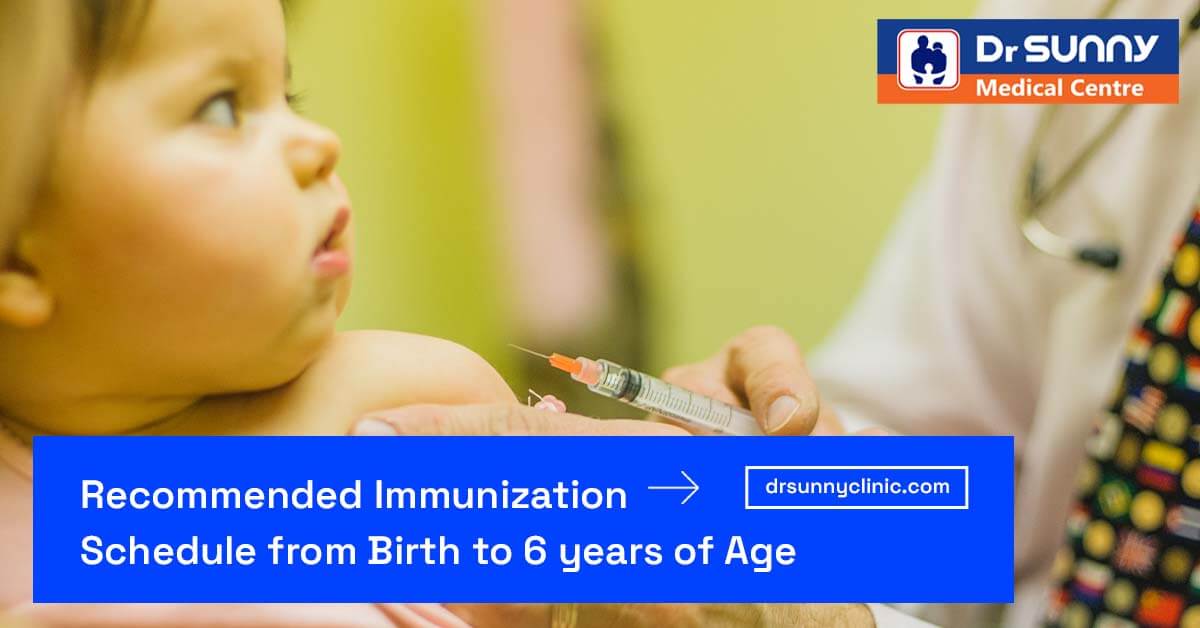
Recommended Immunization Schedule from Birth to 6 years of Age

Recommended Immunization Schedule from Birth to 6 years of Age

Immunization is the best way to protect children from getting a number of diseases that may even prove fatal. As a new parent you might get confused about the vaccinations your child needs. The following schedule can help you to keep a track of the necessary immunizations from age 0-6 years.

Vaccines are a safe way of not only protecting your child but even other children in the community as it can prevent the spread of serious health issues from one child to another. You need to get your child immunized since birth to protect them from deadly viruses like Rotavirus, Hepatitis A & B etc. Your child may need several doses of the vaccines to achieve complete protection. Here is a list of recommended vaccines along with at what age they should be administered to your child:

At birth: BCG, Hepatitis B.

Two Months: DTaP, Hib, Hepatitis B, IPV, PCV.

Four Months: DPT, Hib, OPV, PCV.

Six Months: DPT, Hib, Hepatitis B, OPV, PCV

12 Months: MMR, Varicella.

18 Months: DTap, Hib, OPV, PCV.

Five to Six Years: DPT, OPV, MMR, Varicella

Types of Vaccine

Hepatitis B

The first dose of Hepatitis B vaccine is usually given within 12 hours of birth, the second at about 2 months and third at about 6 months. Variations may occur in this schedule based on mother’s Hepatitis B surface antigen test. Your pediatrician will discuss it with you.

Diptheria, Tetanus, Pertussis

Five doses of this combination vaccine are administered to your child. The first dose is given at the age of 2 months, second dose at 4 months, third dose at 6 months, fourth dose at 15 months and last dose at about 5 years of age. Again slight variation is possible and your pediatrician will discuss it with you.

Haemophilus Influenzae Type B

Four doses of this vaccine are administered to your child. There might be a slight variation in the schedule and your pediatrician would let you know about it.

MMR (Measles, Mumps, Rubella)

Two doses of this combination vaccine are given to children. The first dose is administered at about 12 months of age and second at about 5 years of age.

Rotavirus

The Rota Teq vaccine provides protection against rotavirus, a viral infection that can cause fever, vomiting and diarrhea. It is given three times, each about one to two months apart.

OPV (Oral Polio Vaccine)

Four doses of inactivated polio vaccines are given orally to your child since birth to six years of age.

Varicella

Two doses of Varicella (Chickenpox) are usually given at about 12 months of age and 5-6 years of age.

Your child’s doctor may also suggest additional vaccines depending on your child’s medical history and immunity level. Your pediatrician will advise you about the need of these vaccines and provide a revised vaccination schedule in case your child missed getting a vaccine during the recommended age.


It is Time to Say Goodbye to Food allergies!

It is Time to Say Goodbye to Food allergies!

Food allergies and its possible serious consequences is one of the major causes of concern among new parents. New mothers are often warned about foods like peanut, fish and egg and are asked to avoid introducing them until preschooler years.

Now studies have shown that introducing children to allergenic food such as eggs or peanuts early on and more often may prove helpful in lowering the risk of allergies. New parents are actively encouraged to introduce these foods between 4-6 months. The ground-breaking studies were published and supported by recommendations from American Academy of Pediatrics (AAP) and National Institutes of Health (NIH).

Allergy causing foods including nuts, egg, dairy products, soy and shellfish can be introduced to your baby in the form of purees or powder between 4-6 months. A lot of parents have tried introducing peanut by spreading a thin layer of peanut butter on the teething biscuits of toddler.

Preparing and making the children eat the common allergy causing foods can be a challenging task for many parents. A few readymade food products manufactured by some companies are here to help you fight back these food allergies.

Specially Formulated Baby Food: Ready, set, food comes in a simple numbered packet system, and targets three most common food allergens i.e peanuts, eggs and milk. It comes in powder form and can be easily mixed with breast milk, formula or other solid foods. It is completely organic and gentle on your baby’s tummy.

Cautions to Taken before Considering Introducing Allergens:

  • If your family has a history of food allergy or your baby has medical condition such as eczema it is advised to consult your pediatrician before introducing common allergens in any form.
  • Always introduce allergens at the comfort of your home.
  • Monitor your baby for symptoms that can be caused by food allergy like rashes or diarrhea.

Adult Acne: Causes and Treatment

Though people think acne is a problem that mostly occurs during your teens, unfortunately it can occur at any age. People can get acne in their 40s and even beyond. The causes of adult acne remain mostly the same as teen acne – excess skin oil, bacteria, hormonal changes and family history.

Acne typically appears on your face, forehead, chest, upper back and shoulders as these areas of skin have the most sebaceous glands (oil secreting gland). Sometimes self-care or over-the- counter remedies may give you the desired results, but in some cases acne persists even after using these remedies, in such instances you may want to seek medical treatment from a dermatologist.

Common Causes of Adult Acne
Hormonal changes

Hormones known as Androgens, increase in boys and girls during puberty and cause the sebaceous glands to enlarge and produce more sebum. Similar hormonal changes may happen during midlife, particularly in women and lead to breakouts.

Family history

Genetics can also play a role in acne. If both of your parents had acne, you’re likely to develop it too.

Excess Oil & Bacteria

Excess oil can clog pores and rapid turnover of skin cells can lead to backed up hair follicles. Both these scenarios can cause adult acne. Bacteria called P.acnes can also cause adult acne.

Lifestyle

An unhealthy diet and sedentary lifestyle can cause adult acne. Foods like dairy, oil and sugar can particularly trigger acne.

Treatment for Adult Acne

Depending on its severity, acne can cause emotional distress and scar the skin for a lifetime. The earlier you start treatment, the lower your risk of such problems.  A dermatologist can work with you to develop a treatment plan for your acne and unique skin type. Treatments start from basic medicated creams and oral medications to advanced treatments with lasers, medical facials with blue light therapy and other devices.

Once the acne is settled the focus will shift to improving skin texture and reducing sebaceous hyperplasia, or enlarged oil glands. This is important to prevent further breakouts in the future


Busy Mom Beauty Tips

Motherhood is a beautiful and rewarding phase in a woman’s life. But any new mom can tell you that between feeding, diaper changes and cuddles there’s very little time for any self care. New moms are always on a look out for quick treatments that will last for some time to avoid frequent visits to the aesthetic clinic. Keep reading this blog to know a few beauty treatments and tips for busy mothers that will surely come handy to look and feel great without spending a lot of time and effort!

Skin

There are 3 keys steps to maintaining great skin. Cleansing, exfoliation and hydration. These can be achieved even at home using the right products for your skin type. Your dermatologist can help guide you about which products would be suitable. If your skin needs a further boost, regular medi-facials can be customized to your needs. These facials are both relaxing and effective. For most people once a month sessions is sufficient to get that extra boost mommy-skin deserves!

Hair Care

Post natal hair loss is real! As the levels of pregnancy hormones drop, unfortunately so does the hair. This is perfectly normal and starts around 3 months post delivery and can last up to a year. Even so, it can be very alarming to new mommies who already have a lot on their minds. Even though this phenomenon is very common and is a physiological part of the changes the body goes through, there are a few measures one can take to reduce the hair fall and give support to the weakened hair follicles. The most important step is to continue the pregnancy vitamins for up to a year after delivery. Essential vitamins and micro nutrients are depleted during pregnancy and the first year after delivery. It’s very important to supplement these even after giving birth. Vitamin D and iron are particularly important. Another tip is to avoid any harsh chemical or heat treatments in the first year after delivery as this is when the hair follicles are most vulnerable.

Laser Hair Removal

Who doesn’t love the feel of smooth skin? But shaving daily or opting for traditional hair removal methods such as waxing can be both time consuming and painful. If you are a busy mother who wants to save time, investing in laser hair removal for underarms and bikini areas can effectively cut down on shower time as well as razor burn and leave you with a silky smooth skin. Laser hair removal is safe and lasts longer than the traditional hair removal methods.

Are there Cosmetic Treatments for Men?

It is a common myth that cosmetic treatments are only meant for women. But several issues like adult acne, wrinkles and hair loss are common and bothersome even for men. Men have become conscious about their appearance and breaking the stereotypes, they too are following a strict regime to keep their skin and hair healthy. They don’t shy away from getting the help of modern technology in this quest and are seeking cosmetic treatments for several issues.

Eliminating the prejudices, men are ready to experiment with different cosmetic treatments ranging from Botox to hair transplant that are easily available in order to enhance their looks. The most common cosmetic treatments for men include:

Botox

The signs of ageing do not just bother the women it can be a cause of grave concern for the men also. This is the reason why men are also seeking Botox procedures. Some of the most common areas where men prefer Botox injections are in their forehead in order to reduce the appearance of creases, in the corner of their eyes to treat crow’s feet, around their lips to treat laugh lines, and between their eyebrows to prevent frown lines.

Hair

Male pattern hair loss is one of the most common concerns faced by men. Few men start losing their hair even in their early 20’s which greatly impacts their confidence. Many treatment options are available and usually a combination is suggested. Commonly done treatments for hair loss are: PRP (platelet rich plasma), mesotherapy and light therapy. Usually these treatments are combined with products to be used at home. If these measures are insufficient then the next step is to consider hair transplantation. Modern advances in this field have greatly improved the outcome and lowered costs. Hair transplant remains the best option for advanced cases.

Beard shaping and laser hair removal

Regular shaving can cause in growths and breakouts in men in the beard and neck areas. Beard shaping with laser hair removal has greatly improved the quality of life in men who face these problems. It is a safe and effective method and lasts for months to years. Men also opt for body hair removal especially for hygiene reasons.

Fillers

Women aren’t the only ones who suffer from age related volume loss. Men too lose their facial contours and definition with age which can be aesthetically treated by using fillers. Young men as well can benefit from the contouring and definition effects of fillers, especially for the jawline and chin areas