
Key Facts About Flu Shots You Must Know

Key Facts About Flu Shots You Must Know

As we all know flu is a contagious respiratory illness that can cause fever, chills, coughing, fatigue and body aches. The virus is a cause of concern as it can easily spread rapidly in schools and workplaces. Few people can recover from flu in about one or two weeks without developing any complications. But you need to be extra cautious if you have young kids or senior citizens above 65 years of age at your home. They are prone to develop flu-related complications that can even prove fatal.

You may be getting your seasonal flu shots once a year but you may not know everything about the illness to help you prepare better for the flu season. Here are five facts that you must know about the flu vaccine:

It takes 2 weeks for flu vaccine to work

Flu vaccines trigger antibodies to develop in the body about two weeks after the vaccination. These antibodies provide protection against infection with the viruses that are used to make the vaccine.

Flu vaccine protect against life-threatening complications

Flu vaccination can reduce worsening and hospitalization for flu related chronic lung disease, such as in people with chronic obstructive pulmonary disease (COPD).

It is safe for pregnant women 

Pregnant women can also take the flu vaccine. A number of studies have found that in addition to helping pregnant women, the vaccine given during pregnancy can protect the baby rom flu for several months after birth.

Children need flu vaccine

Flu vaccine can be lifesaving in children. Children aged 6 months and above are recommended to receive 2 doses of flu vaccine, separated by at least 4 weeks. It can significantly reduce the risk of fatality due to flu in children. You can consult a pediatrician if you have any doubts regarding administering flu vaccine to your child.

Common side-effects of flu vaccine

Some people may experience low grade headache, fever, muscle aches, nausea or fatigue after getting a flu shot. These minor side-effects are short-lived and should not stop you from getting vaccinated.


 

Is Your Child Doing What They’re Supposed To Do?

Is Your Child Doing What They’re Supposed To Do?

You may be excited to see your child roll over for the first time or take their first step without any support, but sometimes all these important milestones are delayed. These delays can be a sign of something more serious, so it is important to talk to your pediatrician about them.

Major Milestones during first few years 

Before going through the milestones, you should remember that every child is unique and develops at an individual pace. Read on to know about some common milestones for each age period:

Birth to 18 months

There are four key areas of development including physical development, cognitive development, language development and social-emotional development. By the time your child reaches 18 months of age he/she would have learned to walk, may even climb a step or two, knows how to say few words, can wave bye, may have tantrums, will learn to use some basic things like a spoon.

18 months to 2 years 

By 24 months of age your child may use simple two-word phrases, runs, can draw lines, enjoys play dates with other children.

Act early

If you are concerned about your child’s development don’t wait as it can worsen the situation. Acting early on developmental concerns can make a real difference for your child and you.

Talk to your Pediatrician

If you have concerns about your child’s development you can talk to your pediatrician. Your pediatrician may ask some additional questions or ask you to fill out a complete screening questionnaire online or on paper. Your inputs are important as based on the answers the pediatrician will decide what kind of treatment is required to help the child. You can also take the help of specialists including a developmental pediatrician, child neurologist, child psychologists or psychiatrists.

Common Therapy for Developmental Delays

There are several programs to help families to overcome the developmental delays. These services are specially designed to meet a child’s individual needs. For example if a child is having trouble with fine motor skills, visual motor skills such as picking up small objects or feeding himself, he/she may be referred to an occupational therapist. If a child is having trouble in speaking or understanding language, he/she may be referred to a speech therapist.

Safe Sleeping Practices for Babies

Safe Sleeping Practices for Babies

During the first few weeks of life, babies sleep for about 16 hours a day, that’s why creating a safe sleeping environment is imperative. It is important for new parents, caregivers or babysitters to be aware about safe sleeping practices to reduce the risk of injuries and sleep related infant death syndromes including Sudden Infant Death Syndrome (SIDS). Keep reading to know more about how you can keep your baby safe during sleeping.

  1. Share room with your baby: The risk of sleep related infant death can be reduced if you decide to share a room with your baby and sleep close by. For example, place your baby’s crib beside your bed. This way you won’t be sharing the bed or sleeping surface but your baby will still be at an arm’s length.
  2. Place your baby to sleep on his/her back: Your pediatrician would have already suggested you to always place the baby on their backs while putting them to sleep. It’s not safe for a baby to sleep on his side or tummy. If your baby has started rolling over from his back to side or tummy and back again, then changing positions should not be considered as a problem.
  3. Put your baby to sleep on a firm surface: The mattress in the crib should stay firm and make sure that there are no gaps between the frame and mattress. Make sure there are no toys, or other objects in the crib, they put your baby in danger of being suffocated.
  4. Dress your baby in comfortable clothes: Do not cover baby’s head while putting him to sleep and remove strings or ties from the dress, if any. Make sure the room is at comfortable temperature.
  5. Don’t let your baby sleep in a carrier, sling or stroller: If your baby has fallen asleep in a carrier or sling, make sure that you take him/her out and put them in the crib as soon as you can.

If you have any doubts about the sleeping practices, you can always consult a children’s doctor to create a safe sleeping environment for the baby.


Benefits of Exercise in Children with Congenital Heart Disease

Benefits of Exercise in Children with Congenital Heart Disease

In this modern era we are well aware of the benefits of exercise and medical practitioners encourage us to include some kind of physical activity in our daily routine, even if someone diagnosed with congenital heart disease. Several studies have shown that moderate exercise is safe as well as beneficial for patients suffering from complex diseases.

Usually parents of children with Congenital Heart Disease (CHD), are concerned about how much physical activity should be considered safe for their child. Few diagnoses such as risk of ventricular arrhythmia justify activity restrictions but for most moderate levels of physical activities should be encouraged. Physical activity has been known to ensure regular development in both healthy as well as chronically ill children.

There are numerous benefits of physical exercise in patients with moderate forms of CHD such as:

  • Well-described physiological improvements in skeletal muscle function, vascular health, immune system function.
  • Health risks associated by following a sedentary lifestyle including obesity, diabetes, cardiovascular disease and depression can be kept at bay by following the recommended levels of physical activity. Get a specific exercise plan chalked out for your child from the pediatrician.
  • The quality of life of children suffering from CHD can be improved by including functional independence.
  • Physically active children and adolescents have lower blood pressure levels, higher bone density and decreased adiposity compared to their sedentary counterparts.

Children with minimal cardiovascular defects and those who have undergone successful surgery can be encouraged to lead an active life. Exercise training in such children will improve their exercise capacity. In serious forms of CHD strenuous exercise should be avoided. Exercising should be a pleasant experience for the children as well as the parents, never force it on your child. Always consult your pediatrician before you decide on an exercise routine for your children.


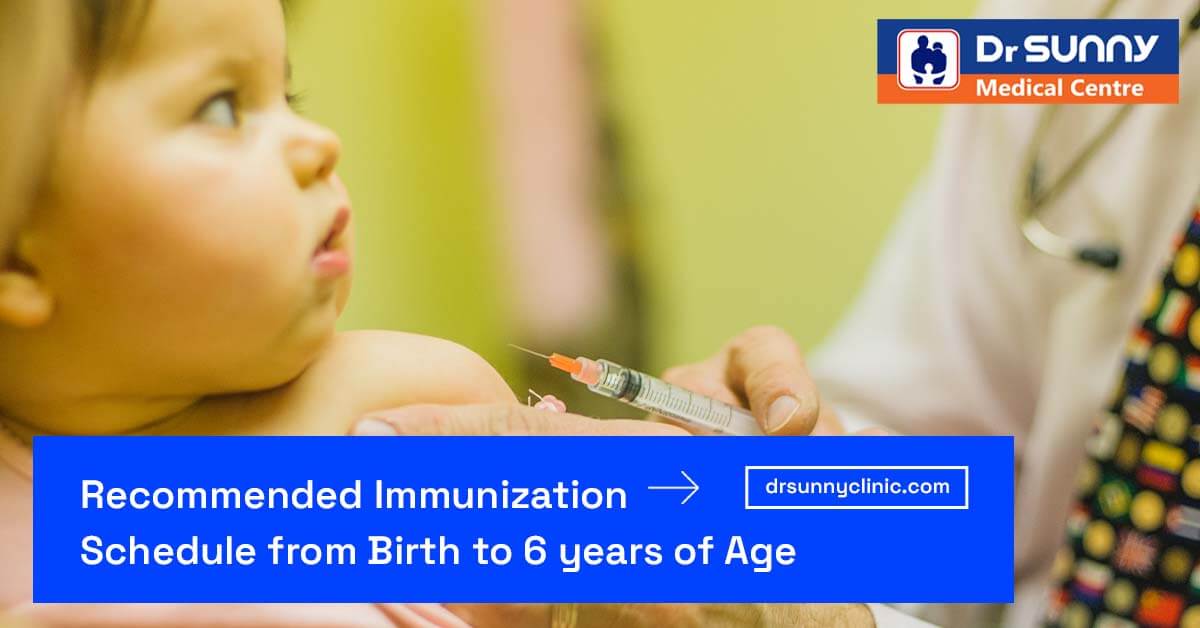
Recommended Immunization Schedule from Birth to 6 years of Age

Recommended Immunization Schedule from Birth to 6 years of Age

Immunization is the best way to protect children from getting a number of diseases that may even prove fatal. As a new parent you might get confused about the vaccinations your child needs. The following schedule can help you to keep a track of the necessary immunizations from age 0-6 years.

Vaccines are a safe way of not only protecting your child but even other children in the community as it can prevent the spread of serious health issues from one child to another. You need to get your child immunized since birth to protect them from deadly viruses like Rotavirus, Hepatitis A & B etc. Your child may need several doses of the vaccines to achieve complete protection. Here is a list of recommended vaccines along with at what age they should be administered to your child:

At birth: BCG, Hepatitis B.

Two Months: DTaP, Hib, Hepatitis B, IPV, PCV.

Four Months: DPT, Hib, OPV, PCV.

Six Months: DPT, Hib, Hepatitis B, OPV, PCV

12 Months: MMR, Varicella.

18 Months: DTap, Hib, OPV, PCV.

Five to Six Years: DPT, OPV, MMR, Varicella

Types of Vaccine

Hepatitis B

The first dose of Hepatitis B vaccine is usually given within 12 hours of birth, the second at about 2 months and third at about 6 months. Variations may occur in this schedule based on mother’s Hepatitis B surface antigen test. Your pediatrician will discuss it with you.

Diptheria, Tetanus, Pertussis

Five doses of this combination vaccine are administered to your child. The first dose is given at the age of 2 months, second dose at 4 months, third dose at 6 months, fourth dose at 15 months and last dose at about 5 years of age. Again slight variation is possible and your pediatrician will discuss it with you.

Haemophilus Influenzae Type B

Four doses of this vaccine are administered to your child. There might be a slight variation in the schedule and your pediatrician would let you know about it.

MMR (Measles, Mumps, Rubella)

Two doses of this combination vaccine are given to children. The first dose is administered at about 12 months of age and second at about 5 years of age.

Rotavirus

The Rota Teq vaccine provides protection against rotavirus, a viral infection that can cause fever, vomiting and diarrhea. It is given three times, each about one to two months apart.

OPV (Oral Polio Vaccine)

Four doses of inactivated polio vaccines are given orally to your child since birth to six years of age.

Varicella

Two doses of Varicella (Chickenpox) are usually given at about 12 months of age and 5-6 years of age.

Your child’s doctor may also suggest additional vaccines depending on your child’s medical history and immunity level. Your pediatrician will advise you about the need of these vaccines and provide a revised vaccination schedule in case your child missed getting a vaccine during the recommended age.


It is Time to Say Goodbye to Food allergies!

It is Time to Say Goodbye to Food allergies!

Food allergies and its possible serious consequences is one of the major causes of concern among new parents. New mothers are often warned about foods like peanut, fish and egg and are asked to avoid introducing them until preschooler years.

Now studies have shown that introducing children to allergenic food such as eggs or peanuts early on and more often may prove helpful in lowering the risk of allergies. New parents are actively encouraged to introduce these foods between 4-6 months. The ground-breaking studies were published and supported by recommendations from American Academy of Pediatrics (AAP) and National Institutes of Health (NIH).

Allergy causing foods including nuts, egg, dairy products, soy and shellfish can be introduced to your baby in the form of purees or powder between 4-6 months. A lot of parents have tried introducing peanut by spreading a thin layer of peanut butter on the teething biscuits of toddler.

Preparing and making the children eat the common allergy causing foods can be a challenging task for many parents. A few readymade food products manufactured by some companies are here to help you fight back these food allergies.

Specially Formulated Baby Food: Ready, set, food comes in a simple numbered packet system, and targets three most common food allergens i.e peanuts, eggs and milk. It comes in powder form and can be easily mixed with breast milk, formula or other solid foods. It is completely organic and gentle on your baby’s tummy.

Cautions to Taken before Considering Introducing Allergens:

  • If your family has a history of food allergy or your baby has medical condition such as eczema it is advised to consult your pediatrician before introducing common allergens in any form.
  • Always introduce allergens at the comfort of your home.
  • Monitor your baby for symptoms that can be caused by food allergy like rashes or diarrhea.

Have you considered choosing your baby’s pediatrician yet?

Have you considered choosing your baby’s pediatrician yet?

If you are about to welcome a newborn, it is advisable to start your research to find a pediatrician before the baby arrives. As new parents you will need to make multiple visits to the pediatrician for the first two years for immunizations, well-baby visits, conducting physical examinations to chart developmental milestones and many other reasons. So, choosing the right pediatrician for your little one becomes a huge responsibility that can even overwhelm new parents. To make the job easier here is a list of factors that you should consider before choosing the best pediatrician near you for your baby.

Get recommendations:

Asking for recommendations from family, friends and co-workers who already have babies might help you to narrow down on your search for the best pediatrician in town. Additionally, you can do a Google search asking ‘pediatricians near me’ and go through reviews about the pediatricians appearing in the search. This way you can create an initial list to find the best pediatrician for your baby.

Experience of the pediatrician:

An experienced pediatrician will be able to guide you properly regarding the health, nutritional requirements, and developmental milestones of your baby. With experience the doctor will make you and the baby comfortable while doing a thorough check-up of your newborn.

Location of the clinic:

Before registering your newborn at a clinic always consider the location of your pediatrician’s clinic and hours of operation. If you find a good pediatrician near your residence it can save you a lot of travel time. Always check for the office timings of the clinic and check if it matches to your schedule. Check if appointments can be booked in advance, so that you need not wait in long queues at the pediatrician’s office.

Find a pediatrician who can understand your concerns:

Look for a pediatrician who can understand your language and culture, this makes it much easier for you to explain the issues faced by you as a new parent.

If you’re looking for a new pediatrician, we’d love to be your new medical home!
Call 06 566 8966 or Whatsapp us on +971547912624

Dr. Sunny’s Approach

Dr Sunny Kurian, a renowned pediatrician in Sharjah, has a unique approach to his patients, be it a newborn or an adolescent. Both parents and children are first put at ease in a child-friendly environment before he embarks on a detailed history and examination. Rather than overwhelm the child with unpleasant examination techniques, he plays with them and uses instruments only when required. All the while observing the child and making a head to toe examination.

Only essential investigations are requested to optimize diagnosis and prescriptions are kept to the minimum. Immunization, physical activity and diet are of paramount importance to Dr Sunny and substantial time is spent counselling both parents and children regarding the same.

Adolescent Care

Adolescent care is an area of special interest and expertise to Dr Sunny Kurian. Most of his patients who he had seen as infants have now either grown up and had their own babies or are currently in their teens.

Dr Sunny finds it important that in an era of easy internet access, increased screen time and social media due importance must be given to these crucial years of a child’s development. It is equally important to advise parents on how to tackle these tricky novel situations.

‘Caring Hands, Healing Touch’

Over the last 3 decades, Dr Sunny has evolved his practice from a single doctor clinic to a multispecialty healthcare group where the entire focus is patient-oriented. Affordable healthcare with the motto ‘Caring Hands, Healing Touch’ is still his driving forces. This is the philosophy that led the Dr Sunny Healthcare group to become the largest chain of polyclinics in the Northern Emirates before merging with NMC healthcare.

Knowledge Transfer

During his 3 decades in the field of Paediatrics, he has treated patients as well given several talks at conferences and medical institutions. Over the years he has developed a penchant for imparting knowledge to his peers and junior doctors. He is a key advisor to the Indian Academy of Paediatrics (IAP) on statutory matters and he also pioneered the first overseas branch of the IAP in the UAE. He was conferred the FIAP (Fellowship of the Indian Academy of Paediatrics) in 2017 for his contribution to the field over two and a half decades.

In the current scenario of lockdowns and home e-learning, there is bound to be a surge in learning and behavioural problems that would have to be addressed. Dr Sunny urges parents to seek help when necessary.

Dr Sunny currently practices as a child specialist doctor in his own Sharjah clinic(Dr Sunny Medical Centre, Sharjah).


All you need to know about Infant Torticollis

All you need to know about Infant Torticollis

Have you noticed that your infant holds his or her neck tilted to one side and has difficulty in turning the head to the other side? If yes, then this may be a sign of Congenital Muscular Torticollis, also known as stiff or wry neck. In this condition the muscle that runs on both sides of the neck, from back of the ears to the collarbone (known as Sternocleidomastoid) is tight and shortened, making it difficult for the baby to turn his or her neck.

In newborns torticollis can happen due to baby’s position in the womb or because of a difficult childbirth. The good news is the condition usually gets better with simple position changes and exercises.

Signs & Symptoms of Infant Torticollis

A newborn with torticollis might:

  • Develop flat head on one or both sides from lying in one direction all time.
  • If breastfed, baby has trouble in feeding on one side or in some cases prefers feeding on one breast.
  • Tries hard to turn towards a particular side and gets cranky when unable to turn head completely.
  • Some babies might develop a small lump in neck, which is similar to a knot in a tense muscle.
  • Tilts head only in one direction.

Causes of Torticollis

This condition may happen if a fetus is cramped inside the uterus or in an unusual position. The use of vacuum to deliver a baby also increases the chances of torticollis in a newborn. Some babies with torticollis also have developmental dysplasia of the hip.

How to Treat Torticollis?

If your baby is diagnosed with torticollis, your pediatrician might suggest neck exercises for the baby that can be easily done at home. These exercises are helpful in loosening up the tight muscles and can straighten up your baby’s neck.

Sometimes the pediatrician may suggest pediatric physiotherapy in some cases. The pediatrician will check your baby every two-four weeks to see if the condition is getting better.

Nutritional Facts of Breast Milk: A Perfect Balance of Everything

Nutritional Facts of Breast Milk: A Perfect Balance of Everything

Health organizations around the world recommend breast milk as the ideal source of nutrition to support early life. Exclusive breastfeeding is recommended by pediatricians for the first 6 months for your baby. Breast milk is composed of hundreds of macronutrients, micronutrients and bioactive molecules that are essential for the growth of your newborn.

Although infant formula also provides complete nutrition, it does not completely emulate the immune benefits of breast milk. Breast milk is not only a complete source of nutrition, but it also helps protect babies from falling sick because of the antibodies that get passed from mother to baby through milk.

Macronutrient Composition

Breast milk is basically composed of water, carbohydrates, proteins and lipids. Breast milk alone provides all water required by young babies for survival. The main carbohydrate present in breast milk is lactose. Lipids make up about 4% of breast milk, but provide over half of the calories required by your baby. It also contains fatty acids such as DHA which is needed for the development of your baby’s brain, nervous system and vision.

The proteins present in breast milk are easy on your baby’s tummy and are essential throughout every stage of lifecycle. For example, Lactoferrin is a form of protein present in the breast milk that moves iron through your baby’s body and protects your newborn’s intestines from infections.

Micronutrient Composition

Breast milk contains essential vitamins that are necessary for healthy vision, skin and bones. They are needed to prevent diseases caused due to vitamin deficiency including scurvy, rickets etc. Besides vitamins, breast milk is full of essential minerals including calcium, zinc, magnesium and iron. These are necessary to build strong bones, produce red blood cells and promote healthy nerve function.

Talk to your pediatrician to find out if there are any vitamin or calcium supplements you need to take to support breastfeeding.

Bioactive Components

These are unique components passed from mother to baby through breast milk. The primary antibody found in breast milk is Secretory Immunoglobulin (IgA) that coats the baby’s lungs and intestines creating a shield to prevent germs from entering the body and bloodstream. Several enzymes are also found in human breast milk that aid digestion by breaking down fats or proteins. Few enzymes found in breast milk also support the immune system.


Early Assessment of Learning Difficulties is a Boon


Early Assessment of Learning Difficulties is a Boon

Does your child mix up or reverse letters while reading or has difficulty in focusing on work or paying attention in class? If these problems sound familiar then it is essential for you to find out what is happening with your child’s learning skill as early as possible by consulting a pediatrician. Your child may be having learning difficulties including Dyslexia (difficulty with reading), Dysgraphia (difficulty with written expression), Dyscalculia (difficulty with Mathematics), AD/HD (difficulty with memorizing or paying attention).

Early detection of the learning difficulties can help in improving the learning capability of children from the very beginning. The teachers and parents can get the right learning strategies after consulting their child’s doctor that will be specifically tailor made to each child’s specific strengths and weaknesses. Most education experts recommend a full learning assessment as the first step towards helping the child to reach their full learning potential.

What does a full learning assessment involve?

The learning test will vary according to the issues faced by the child and his/her age. Few basic practices include:

  • An initial review of the child’s learning history
  • Standardized cognitive testing (thinking & reasoning ability): This identifies any underlying issue with key skills such as processing speed, auditory processing, verbal learning issues and non-verbal learning issues.
  • Standardized achievement testing (includes academic skills): This test measures the abilities in key academic area such as reading, writing, spelling, mathematics or oral language.
  • Detailed assessment report with a clear summary and diagnostic opinion.
  • Specific learning recommendations for school and home
  • Comprehensive parent feedback session to answer their queries

With right learning strategies and support in place since the beginning, positive results can be achieved and maintained over a long term. Early action also reduces emotional problems associated with school performance such as failure, anxiety and depression. The information can enable parents to make more informed decisions related to their child’s education.

pediatrician